Governing Nusantara
The law, the authority, and the master plan behind Indonesia's new capital, and the 24 targets it's set for itself, in one place.

Governing Nusantara
Nusantara isn't run like an ordinary Indonesian city. It's governed by a purpose-built national authority with special legal powers, operating under its own master plan and its own set of 24 measurable targets, all created specifically for this one project.
The authority behind the capital
In 2022, Indonesia passed UU No. 3/2022 (later amended by UU No. 21/2023), the law establishing Nusantara as the country's new capital and creating the body that would build and run it: the Otorita Ibu Kota Nusantara (OIKN), known in English as the Nusantara Capital Authority. On March 10, 2022, the President inaugurated the Authority's first Head (Kepala Otorita, "Chairman" in English) and Deputy Head.
OIKN isn't a typical ministry or a typical city government: it's a special regional government (Pemerintah Daerah Khusus) with its own dedicated powers, set out in Peraturan Presiden No. 62/2022 and given further special authority under PP No. 27/2023. Its job is twofold: prepare, build, and oversee the relocation of the national capital, and function as Nusantara's actual local government once people live there.
Two further regulations fill in the detail: Perpres No. 63/2022 spells out the master plan itself, and Perpres No. 64/2022 sets the formal spatial plan for the territory through 2042.
The five-phase roadmap
Nusantara's construction and population growth are planned in five phases, running from 2022 to 2045. This is the government's own formal roadmap. For the fuller story of how the project actually unfolded, see our History page.
Tahap 1 (2022–2024)
Three parallel work streams: urban development, infrastructure, and economic development. Early housing goes up for military, police, and civil-service personnel; from 2023, R&D facilities, universities, and health facilities begin. Relocation starts with security personnel in 2023, followed by executive, legislative, and judicial bodies in early 2024.
Tahap 2 (2025–2029)
Core infrastructure comes online. Target: the "10-minute city" (any daily destination reachable within 10 minutes by transit or on foot) plus a dedicated VVIP/commercial airport.
Tahap 3 (2030–2034)
Mass transit, wastewater treatment, drinking water treatment, waste management, and digital city services targeted to be fully operational within the government core (KIPP).
Tahap 4 (2035–2039)
Rapid growth in education and health infrastructure; development expands north and east.
Tahap 5 (2040–2045)
Development target reached: a population of 1.7–1.9 million people, at roughly 100 people per hectare.
These are targets, not a scoreboard. Everything on this page describes what Nusantara's own laws and master plan say it's aiming for, set out in documents dated 2022 to 2024. For a running count of what's actually been built so far, see our Statistics page, which tracks real construction progress rather than stated goals.
The Eight Principles of the National Capital
Indonesia's master plan regulation (Perpres No. 63/2022) doesn't just describe a vision for Nusantara in general terms: it defines eight named principles, each with two or three specific, measurable Key Performance Indicators attached, mostly targeted for 2045. Together, they're the closest thing Nusantara has to a report card it's written for itself in advance.

1. In Harmony with Nature
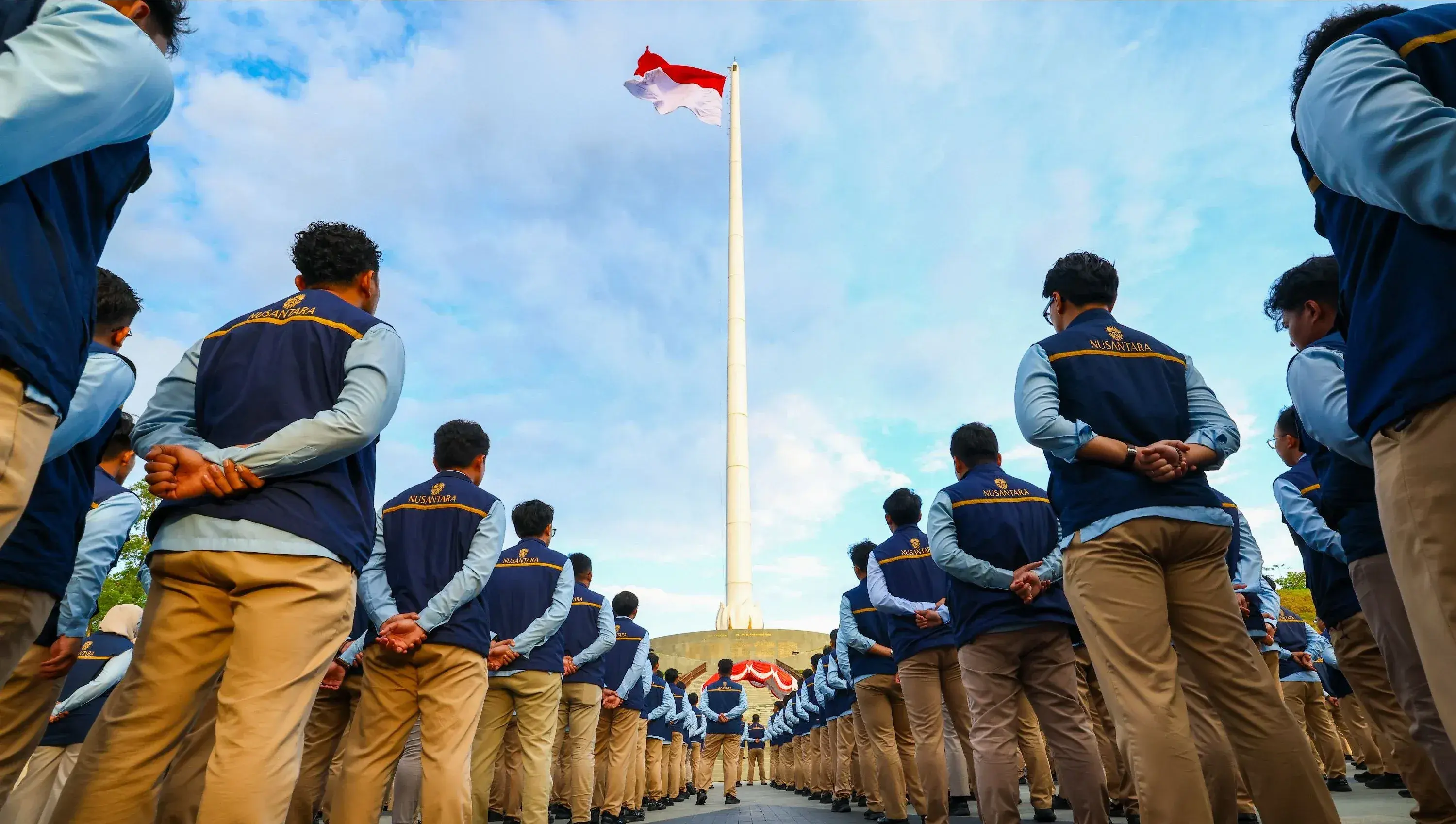
2. Unity in Diversity
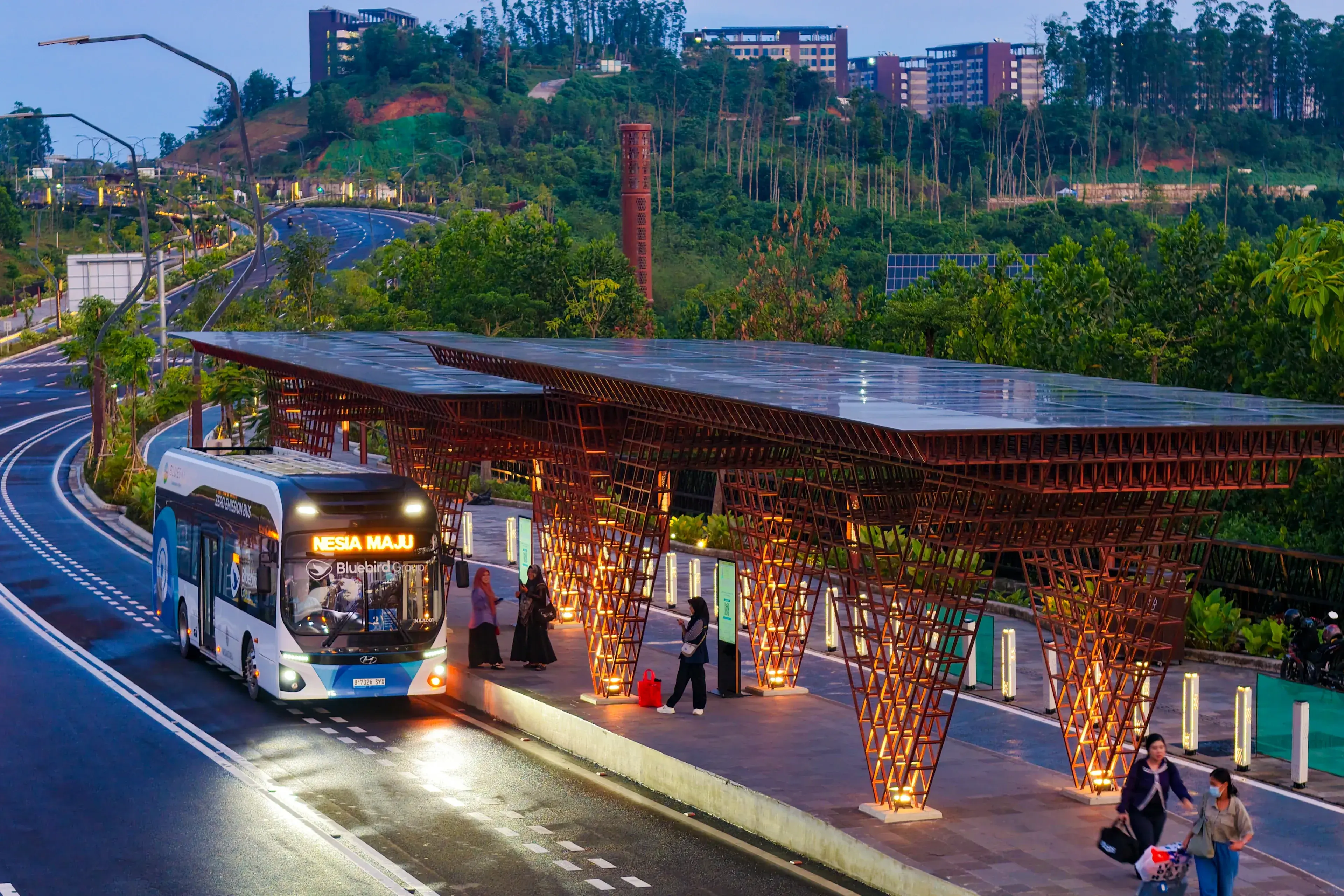
3. Actively Connected and Easily Accessible
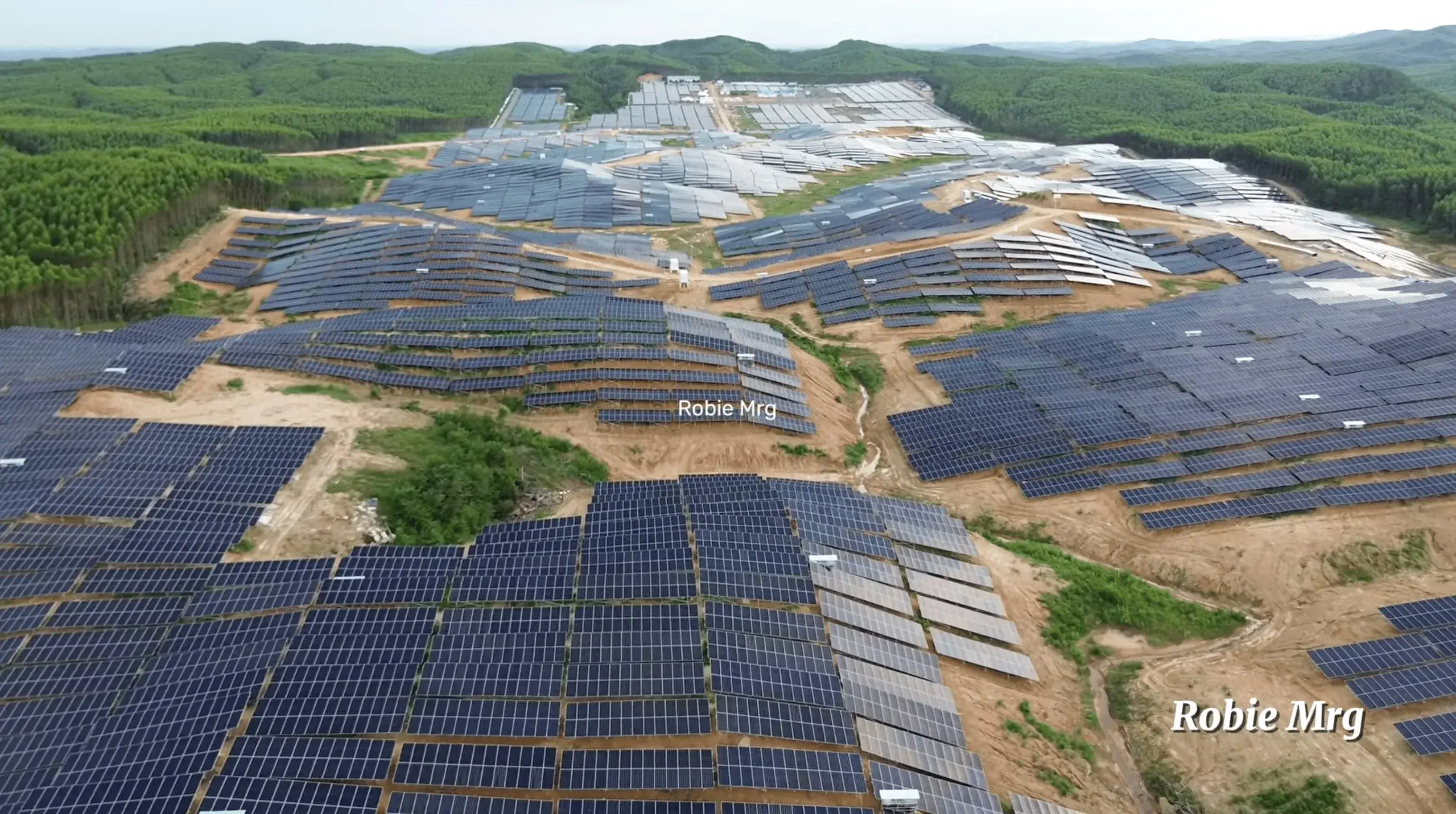
4. Low Carbon Emission
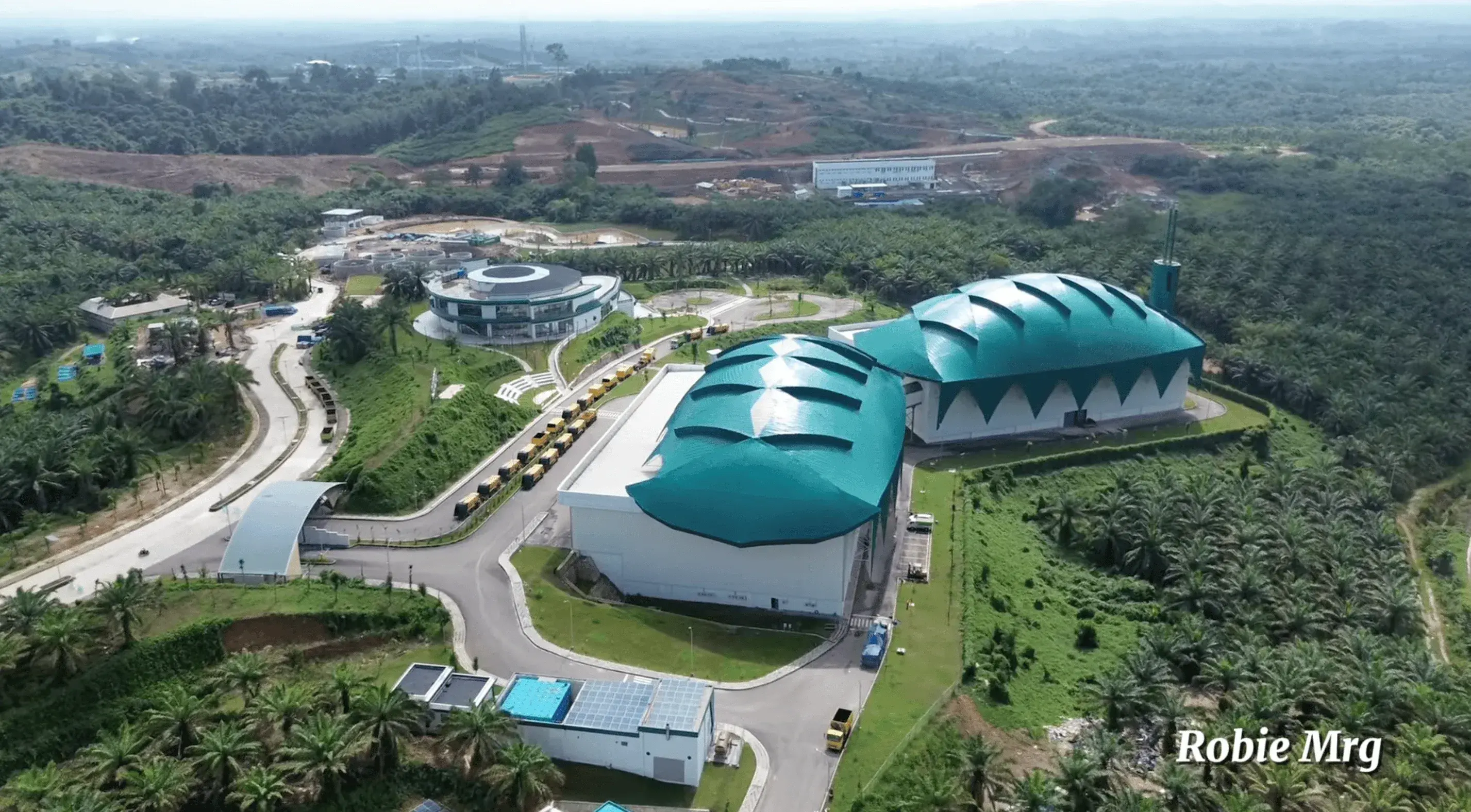
5. Circular and Resilient
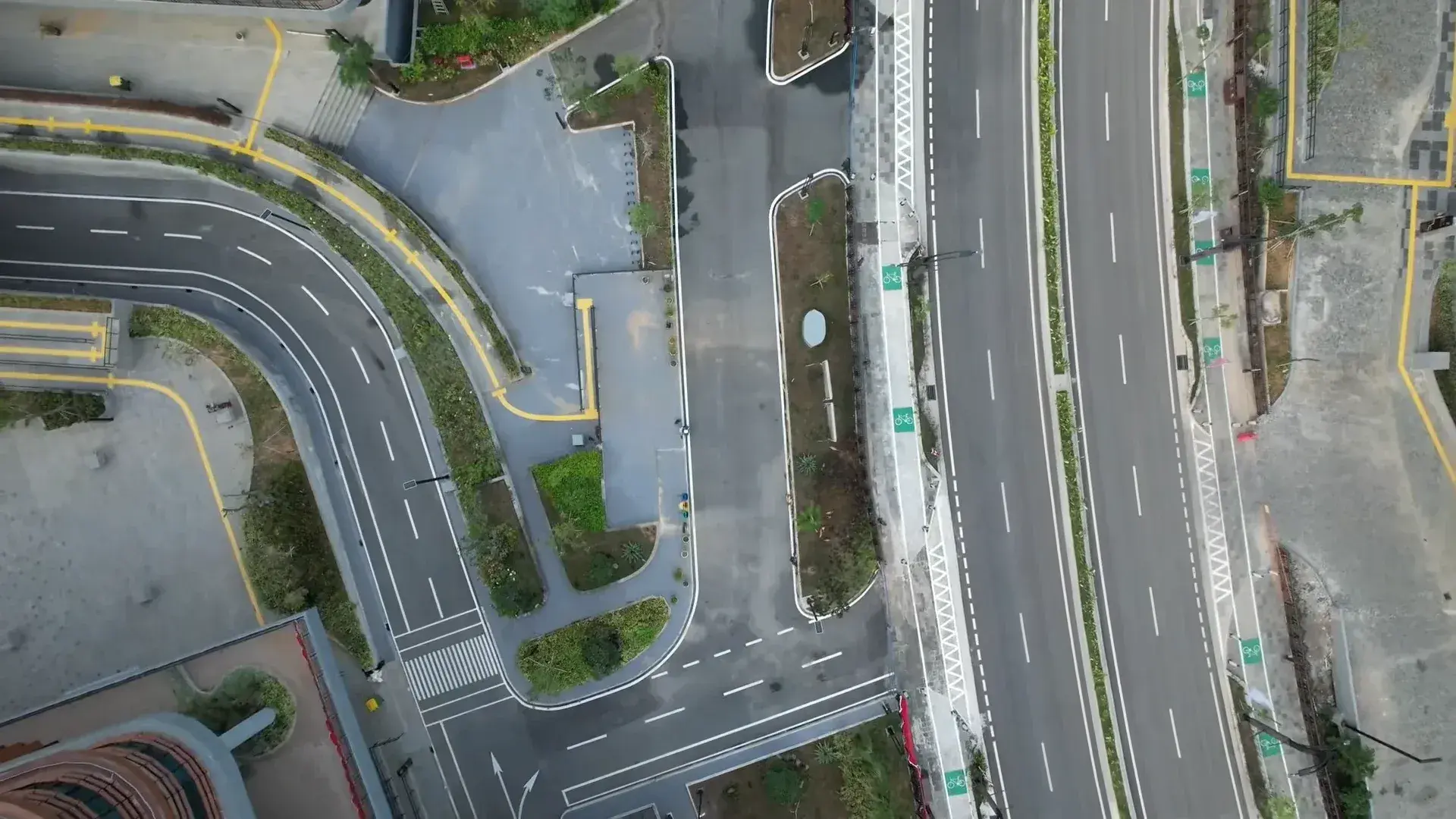
6. Safe and Affordable
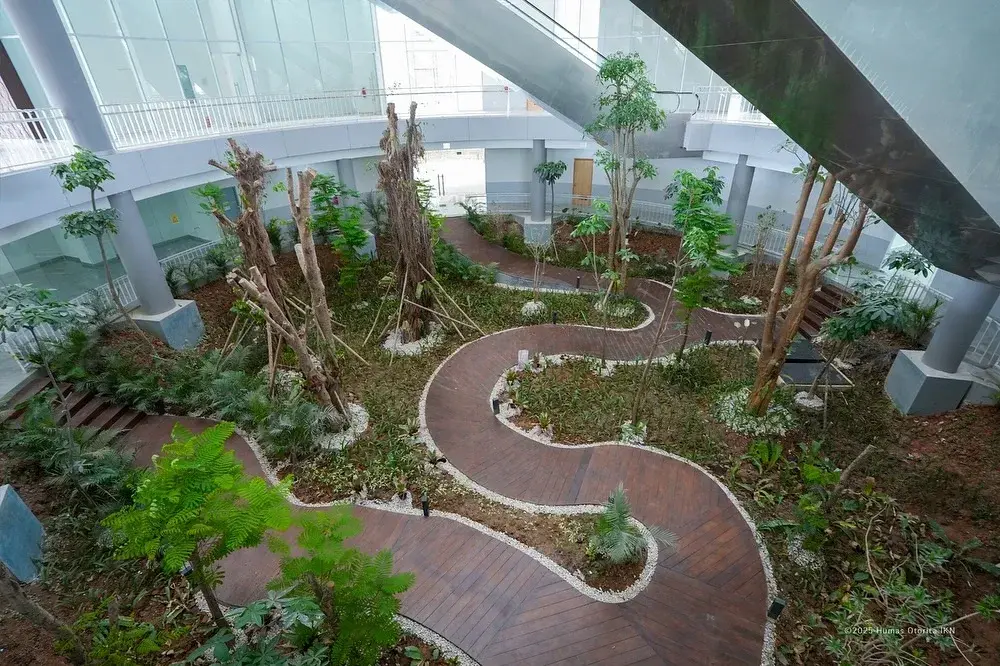
7. Comfortable and Efficient through Technology
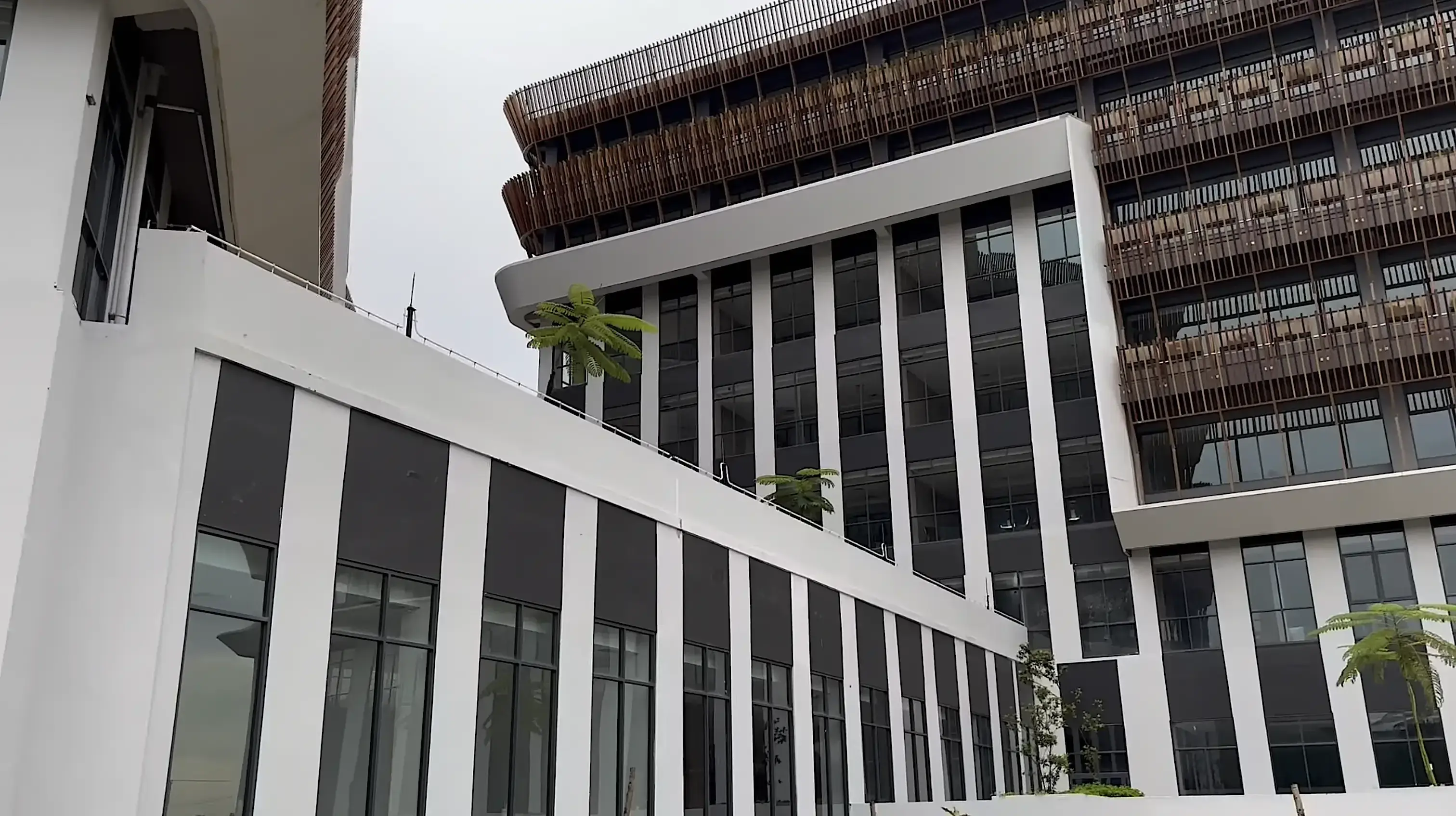
8. Economic Opportunity for All
Who's actually in charge
As of the most recent OIKN information available to us, Nusantara's Capital Authority is led by Basuki Hadimuljono as Kepala Otorita ("Chairman"), with several named deputies overseeing specific portfolios: environment and natural resources, green and digital transformation, development control, among others.
Leadership changes. The names above come from official documents published in 2023 and 2024. They may no longer reflect who currently runs OIKN. We'd recommend checking OIKN's own site for the current leadership roster before citing anyone by name and title.
Keeping itself honest
OIKN has committed to monitoring its own progress at least annually, feeding results into Indonesia's national "One Data GHG" reporting system (Sistem Registri Nasional) alongside its climate commitments specifically. It has also invited independent monitoring from academic institutions, NGOs, and other outside groups (who report findings back to OIKN's environmental deputy) as a check on its own self-reporting.
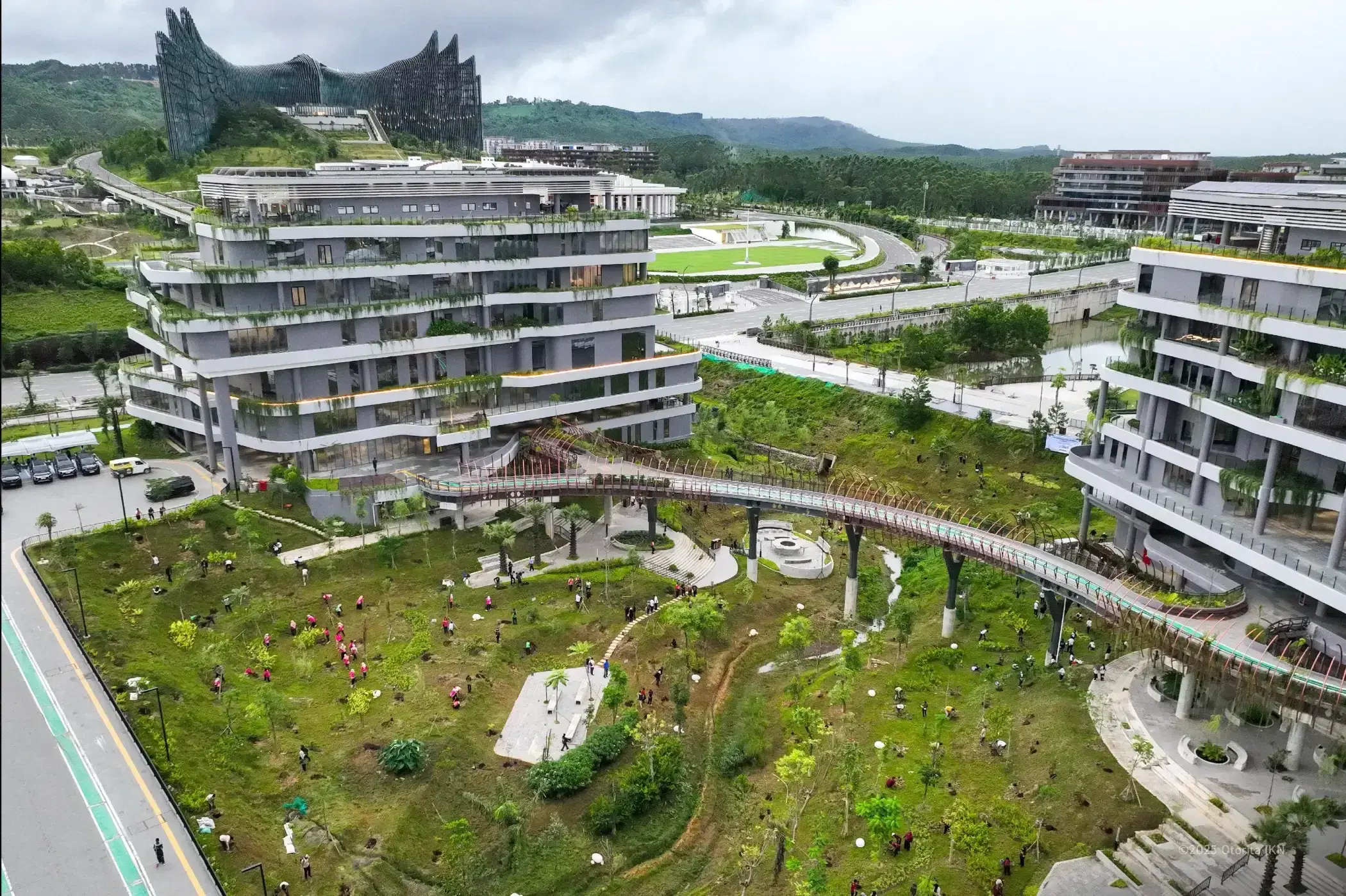
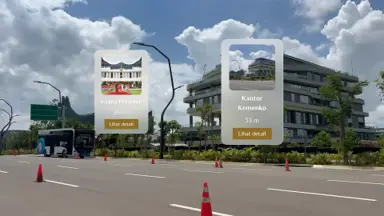
Are you in IKN? Explore Nusantara in AR
NewPoint your phone's camera and discover locations around you in real time, complete with live distance and direction.