Sustainability & Biodiversity
How Nusantara's forest-city concept, climate targets, and circular economy commitments actually work.
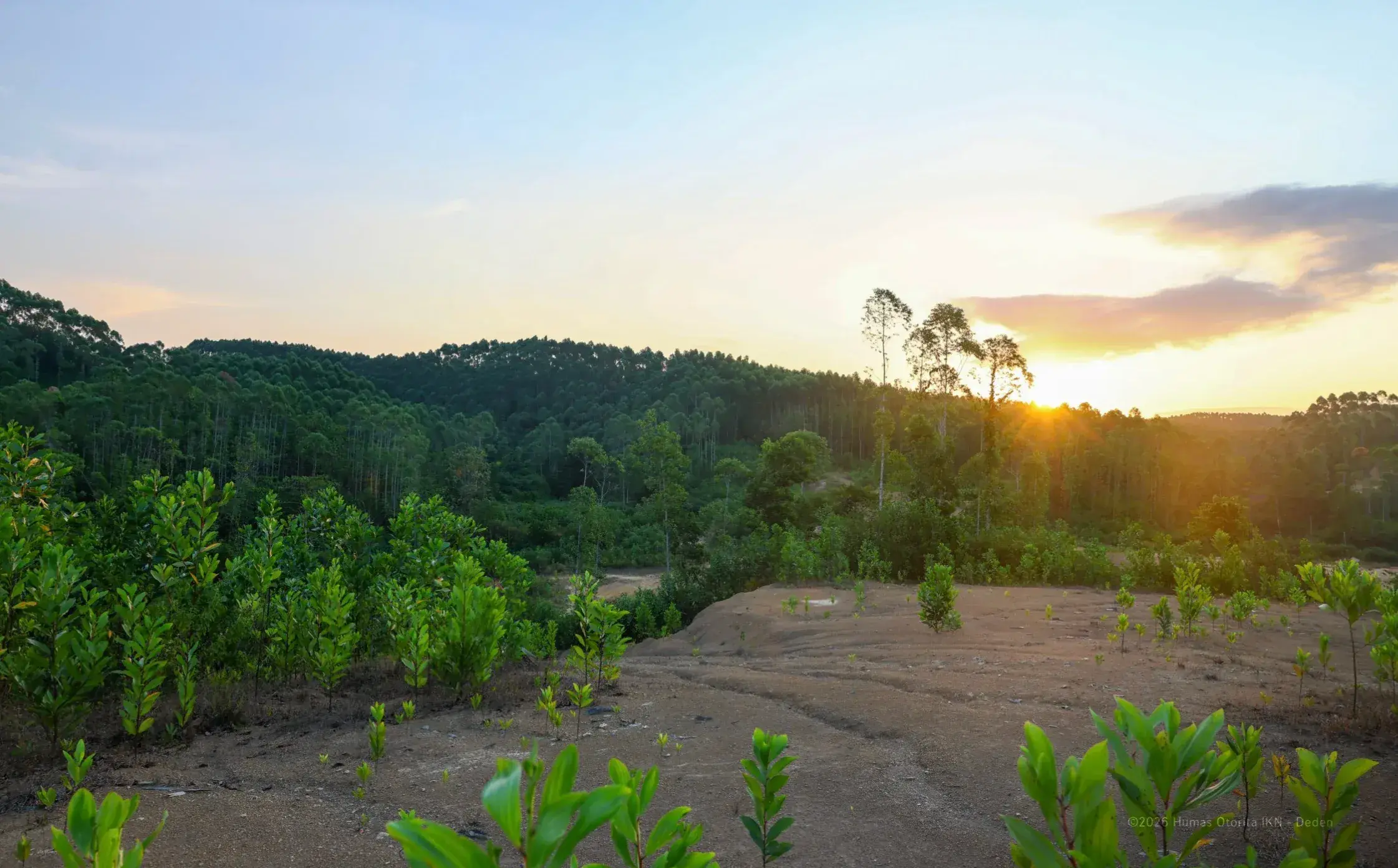
Sustainability & Biodiversity
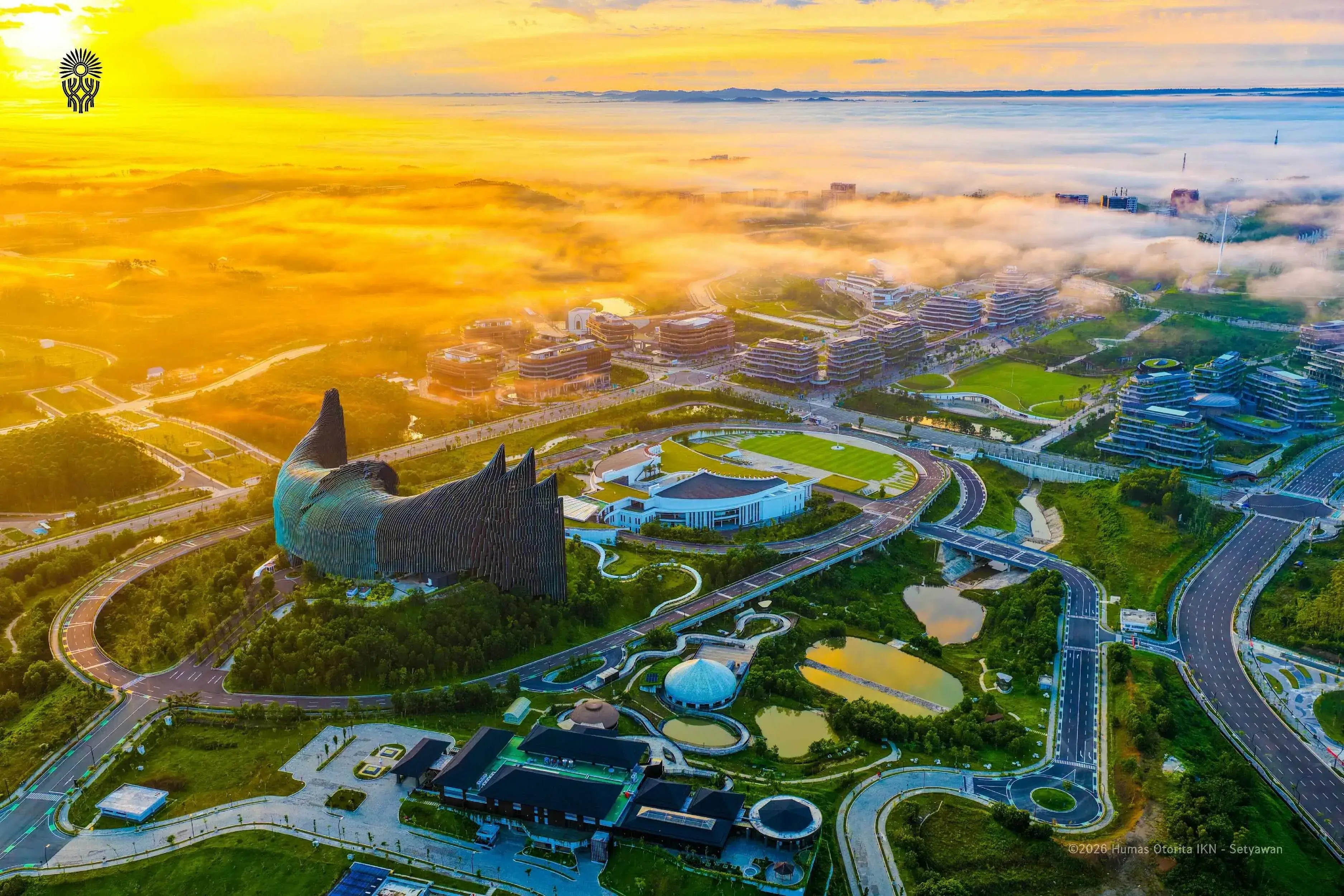
Nusantara's "forest city" tagline isn't a marketing layer sitting on top of an ordinary city. Sustainability targets are written directly into the same Presidential Regulation that defines the city's layout, and they carry the same legal weight as anything else in the master plan. This page walks through what those commitments actually contain: the biodiversity Nusantara sits inside, the climate roadmap it's set for itself, and what happens to its waste, water, and energy.
A city inside one of Earth's richest biodiversity hotspots
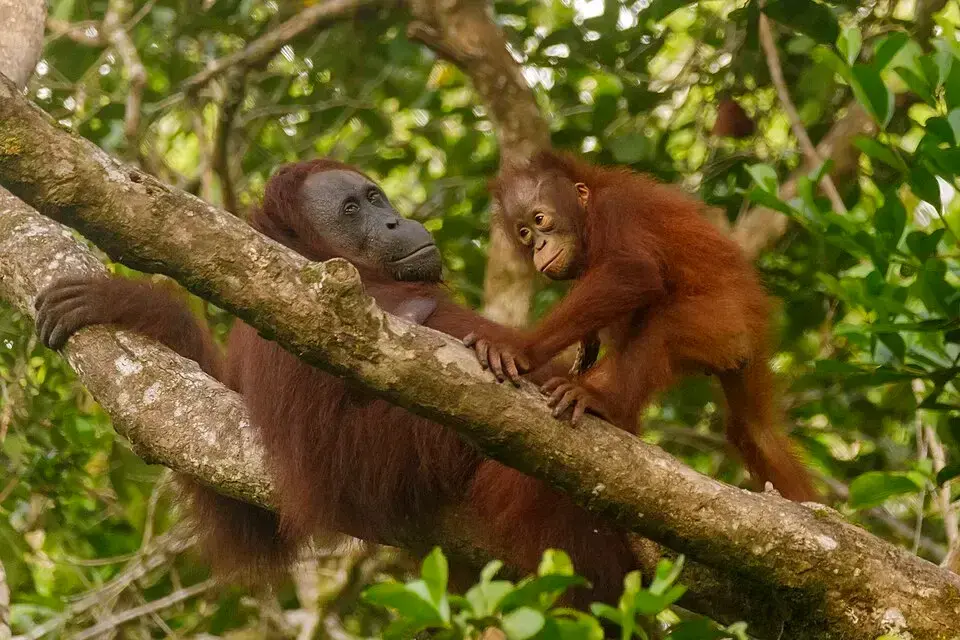
Nusantara sits on the island of Borneo, within the Sundaland biogeographic region, widely recognized as one of the richest and most threatened biodiversity hotspots on the planet. Indonesia as a whole is home to 12% of the world's mammal species and 16% of its reptile species. Borneo itself has more endemic mammal species than any other island in the region, including 25 species found nowhere else on Earth, among them the Bornean orangutan and the proboscis monkey.
Within 50 kilometers of Nusantara specifically, official surveys have recorded 3,889 species: 168 mammals, 454 birds, 206 reptiles and amphibians, 1,369 fish, over 3,000 insects, 826 marine invertebrates, 735 plants, 5 arachnids, and 1 fungus.
A note on scale. Some of the biggest numbers about Borneo's biodiversity (10,000 to 15,000 flowering plant species, for example) describe the whole island or the wider Sundaland region, not Nusantara's own footprint specifically. We've tried to keep island-wide context and Nusantara-specific data clearly separated above; if a figure sounds enormous, check which scale it's describing.
Species at risk, within the same 50 km survey area
"65x30": a protected-area target ahead of the global one
Nusantara has committed to protecting 65% of its territory by 2030 or earlier, a target it calls "65x30." That deliberately outpaces the Kunming-Montreal Global Biodiversity Framework's own worldwide "30x30" target (30% protected by 2030) by more than double. In practice, this means roughly two-thirds of Nusantara's land and adjacent marine area is being kept as forest and marine reserve, linked by wildlife corridors, rather than developed.
You can explore seven of the specific protected areas that make up this network, several of which sit just outside Nusantara's own boundary but are named in its own biodiversity master plan, on our Nature & Wildlife page.
What's actually threatening this land
Before Nusantara's designation, the area was losing forest at roughly 4,000 hectares a year, and only about 16% of the land eventually set aside as protected area was covered by secondary forest at all. The rest was smallholder and industrial agriculture, coal mining concessions, and land recovering from past fires. Two invasive species are specifically flagged in official surveys: Imperata cylindrica (a fire-adapted invasive grass common on previously burned land) and Acacia mangium (a fast-spreading plantation tree species). Reversing this is a stated, explicit goal, not an assumed side effect of building a green city.
The climate roadmap: from emission-free to carbon-negative
Nusantara's climate plan, called the RLDC (Regionally and Locally Determined Contributions), sets a target of reaching net-zero emissions by 2045, at least 15 years ahead of Indonesia's own national target of 2060. Officials modeled three scenarios to test whether that's realistic:
Three scenarios for Nusantara's 2045 emissions
Business-As-Usual Built the way Jakarta was built (same power mix, transport, waste practices) | Master Plan Built according to Nusantara's actual 2022 master plan | Enhanced Master Plan, plus additional national and international support | |
|---|---|---|---|
| Total emissions by 2045 | 10.8 million tons CO2/year | -1.1 million tons CO2/year (net negative) | -1.6 to -1.7 million tons CO2/year |
Built according to Nusantara's actual 2022 master plan
Enhanced's slightly lower percentage isn't worse climate performance — it reflects land deliberately reallocated to agroforestry (forest with an agricultural function) rather than pure forest restoration.
What "carbon-negative" doesn't include. These figures only count emissions produced within Nusantara's own boundary. Materials like cement carry real embedded emissions from their manufacturing, most of which happens elsewhere in Indonesia, so those emissions aren't counted as Nusantara's, even though the buildings using that cement are. If a cement plant were ever built inside Nusantara itself, its emissions would count. Worth keeping in mind whenever "carbon-negative" appears elsewhere on this site.
The roadmap breaks down by sector: forestry and land use aims to reverse deforestation entirely and become a net carbon sink by 2030; energy aims for zero fossil fuel use in electricity and transport by 2030, starting from a 50 MW solar buildout in 2024; industrial processes are a non-issue for Nusantara directly, since no heavy industry is planned within its borders; waste management targets 60% material recovery through reduce-reuse-recycle; and agriculture aims to make farming a net carbon sink through regenerative practices like agroforestry, though the plan is explicit that achieving literally zero agricultural emissions would mean no irrigated rice or fish farming in Nusantara at all, a trade-off it doesn't fully commit to.
The circular economy: waste and water
Nusantara's waste target is 60% material recovery and recycling by 2045, through a reduce-reuse-recycle approach backed by smart waste infrastructure: sensor-equipped bins, optimized collection routes, and automated sorting facilities. Of the remaining waste, most gets converted to energy or new products, with only 10 to 12% of total waste ending up as landfill residue.
On water, the target is for 100% of wastewater to be properly treated by 2035. Nusantara is also designed as a "sponge city," a concept distinct from but related to its forest-city identity: instead of letting rainwater run off pavement the way most cities do, buildings and public space are designed to retain rainwater on-site, using porous surfaces and green roofs to keep the area's natural flood-and-drought buffering intact even as it develops.
Keeping the commitments honest
Nusantara's environmental authority reports progress at least annually, both to its own leadership and to Indonesia's national "One Data GHG" reporting system. It has also explicitly invited independent monitoring from universities, NGOs, and other outside groups, a genuine check on its own self-reporting rather than a purely internal process.
None of this happens in isolation from the rest of Indonesia's economy. East Kalimantan, the province Nusantara sits in, is currently Indonesia's largest coal-producing region. Nusantara's own planning documents frame the shift toward renewable energy as part of a "just transition" for the province, and explicitly acknowledge that phasing out coal will cost jobs in mining and coal power that need to be planned for, not just an incidental cost of building a greener capital elsewhere. See Economy & Population for the fuller economic side of this transition.
Are you in IKN? Explore Nusantara in AR
NewPoint your phone's camera and discover locations around you in real time, complete with live distance and direction.